Monday, March 11, 2013

The Atonement

This entry is part of my general conference application series.

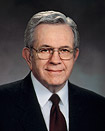
The Atonement, by Boyd K. Packer
President of the Quorum of the Twelve Apostles


My family lives in south Florida. While we love the beauties of our little bit of paradise, there are times when we feel like strangers in a strange land. Just today we were reminded of how our family is different from many others around us.

My son's third-grade class put on a play this morning. He has been working on it for some time, and was quite excited for my wife to attend. When she showed up at the school with a smile and our two not-yet-in-school-aged children, she was turned away. Apparently the school doesn't allow younger siblings to attend events—my first-grade daughter has a similar event upcoming and the invitation reads, "Families are welcome, but no younger siblings are allowed."

I'm sure the school has reasons for these bizarre rules, but I don't know what they are. This example highlights what we perceive to be an environment here where families with more than one or two children are viewed as so strange that they are excluded.

We take regular trips to the beach as a family—it's a perk of south Florida living. While we've seen our share of stormy seas, we've only witnessed them from the [relative] safety of the beach. In his address, President Packer shared an experience he had of traveling between Pacific islands in a storm. Upon hearing that they could not travel by plane, a nighttime boat trip was arranged. After a journey on rough waters, they arrived at their destination island only to find that they could not safely make it to harbor because the lower of a two-light safety system was extinguished. These two lights, when aligned, guided ships through a dangerous passage of reef to the safety of the harbor. Here's what happened:

But that night there was only one light. Two elders were waiting on the landing to meet us, but the crossing took much longer than usual. After watching for hours for signs of our boat, the elders tired and fell asleep, neglecting to turn on the second light, the lower light. As a result, the passage through the reef was not clear.

Here's a picture of a crashing wave my wife painted


I took from President Packer's talk that we need to be the lower light, shining in darkness to guide others to the true light of the gospel of Jesus Christ. This is evidenced in the first verse of a hymn we sometimes sing (link to song):

Brightly beams our Father’s mercy
From his lighthouse evermore,
But to us he gives the keeping
Of the lights along the shore.
Let the lower lights be burning;
Send a gleam across the wave.
Some poor fainting, struggling seaman
You may rescue, you may save.


When I first heard President Packer tell the story of his terrifying trip on the sea, I felt outrage and disappointment when hearing that the missionaries who were supposed to man the lower light became weary and fell asleep. As I read the account today, things changed: instead of condemning these tired young men, I felt in league with them because of how my wife was turned away from our son's school this morning.

What is the connection?

I feel tired today.

When we spend too much time looking around at where we live and see only worldliness and extravagance, we end up feeling like tired outsiders, fatigued from standing against the waves of popular opinion and onslaught of alternative ideas. Much like those tired missionaries on the shore, we sometimes want to take a rest, hoping everything is calmer when we awake.

But then I remember that we're not really alone. In addition to the comfort we find with our few cherished friends (who, like us, try to live the gospel and dare to have more than one child in south Florida), we find strength in our convictions and testimonies.

As a covenant-keeping member of the Church of Jesus Christ of Latter-day Saints, I testify that the atonement of Jesus Christ can cleanse the filth of sin, restoring hope for the future. And it's not just for those in south Florida:


That is what Latter-day Saints do around the world. That is the Light we offer to those who are in darkness and have lost their way. Wherever our members and missionaries may go, our message is one of faith and hope in the Savior Jesus Christ.


It's sometimes hard to feel so different from so many around you, but I'm grateful that I stand with my family and many others around the world as we symbolically keep our lamps trimmed while manning the lower lights that guide all of us safely home.
Friday, March 8, 2013

Where Is the Pavilion

This entry is part of my general conference application series.

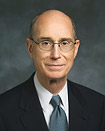
Where Is the Pavilion?, by Henry B. Eyring
First Counselor in the First Presidency


I'm helping the children at church learn (or remember) a wonderful song this month: If the Savior Stood Beside Me. This is a song that is newer than when I was in primary, but it does have a special place in my heart (read more here), and I think it will find a place in the hearts of the children at church, too.

Last Sunday was the first time we sang this song together at church. I had prepared sheets with the words for the children to read as we sang. Usually when I teach them a song, I do it line-by-line with visual aids; this time I wanted to do something different to see if I could help the song's meaning sink in faster. As we read the words and sang I encouraged them to think of the song's meaning.

Here are the words:

If the Savior stood beside me, would I do the things I do?
Would I think of His commandments and try harder to be true?
Would I follow His example? Would I live more righteously,
If I could see the Savior standing nigh, watching over me?

If the Savior stood beside me, would I say the things I say?
Would my words be true and kind if He were never far away?
Would I try to share the gospel? Would I speak more reverently
If I could see the Savior standing nigh, watching over me?

He is always near me, though I do not see Him there
And because He loves me dearly, I am in His watchful care
So I'll be the kind of person that I know I'd like to be
If I could see the Savior standing nigh, watching over me.

After we sang, I asked the children if they felt anything while they were singing. I was surprised to see that many raised their hands and wanted to share—through misty eyes—that the felt that they could be nicer, do more things to help, or be a better example.

Success!

We sang the song a total of three times, and after each singing I would ask for feedback. I was happy to see that the children were engaged and seemed to feel the message of the song. In fact, I felt so wonderful inside that I told them—a couple of times—that what they were feeling was the Holy Ghost testifying that Jesus is always near them and that we can be whom we want to be: like Jesus.

It was a wonderful singing time.

Earlier in the day, during testimony meeting, a couple of people mentioned the familiar quote: "If you feel farther from God, who moved?" I was reminded of this question as I read President Eyring's address. When our actions or attitudes distance us from God, we may ask where God is hiding (under a pavilion, presumably); however, President Eyring reminds that:

Many of us, in moments of personal anguish, feel that God is far from us. The pavilion that seems to intercept divine aid does not cover God but occasionally covers us. God is never hidden, yet sometimes we are, covered by a pavilion of motivations that draw us away from God and make Him seem distant and inaccessible. Our own desires, rather than a feeling of “Thy will be done,” create the feeling of a pavilion blocking God. God is not unable to see us or communicate with us, but we may be unwilling to listen or submit to His will and His time.

The key in getting us out of our personal God-blocking pavilions is to live by the "Thy will be done" mantra. Easy as it may sound to do this, once we leave the safety of sacredness and are surrounded by the cares of the world, we may find our resolution slip.

And that's why I love the song I mentioned earlier so much. Until I can live the higher "Thy will be done" way of life, I'm trying to live the primary-song way of life: If the Savior Stood Beside Me. I think it's a good way to break down my personal pavilion and find my way back to where I want to be: actually standing beside the Savior.

Until we're standing side by side, I want to live as if we were.

----------------------------------------------------------

Here's a video of the song, in case you're unfamiliar:


Thursday, March 7, 2013

See Others as They May Become

This entry is part of my general conference application series.

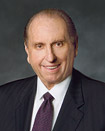
See Others as They May Become, by Thomas S. Monson
President, Church of Jesus Christ of Latter-day Saints


What a team the first presidency is! President Uchtdorf talks about airplanes (what else?) but it's President Eyring who titles his talk "Help Them Aim High." President Eyring talks about helping our children (and others) rise to their potential by seeing them as they can be and encouraging them, but it's President Monson whose talk is "See Others as They May Become." This cohesiveness/connection isn't a big thing, but I thought it was great!

I became increasingly disappointed in myself as I read President Monson's talk: I think I've forgotten to look forward and spend too much time looking back.

Here's what I mean. Much of my non-work time is spent with children—my own children, or children at church through my work in cub scouts and primary. These interactions include many opportunities to address bad behavior as I try to model good behavior. I think that when I confront my children regarding some mistake they've made, I see them only in light of their error and not often enough as they really are and can become.

President Monson shared a story of a successful missionary who was successful, in part, because he pictured those he spoke to in the white clothes of baptism—regardless of their present circumstance. This philosophy is not new to me because I used it as a missionary myself! In fact, I also pictured my sweet girlfriend (now wife) in white while we were dating, but the white was white of a temple wedding, not baptism! (You can read more about this here.)


Here's what President Monson repeated in his address, which I'm going to try to apply particularly to my parenting:

We have the responsibility to see individuals not as they are but rather as they can become. I would plead with you to think of them in this way.

I want to remember that when I interact with children (and others), I'm interacting with the future. I want to see them as the wonderful, bright, intelligent, loving, and caring people that I know they are and will be.

You may ask: How do you know that your children will be wonderful, bright, intelligent, loving, and caring people?

I'll tell you: Because they're not just my children, they're also children of my wonderful, bright, intelligent, loving, and caring wife! (also, they're children of God)

Can't you tell that they're wonderful, bright, intelligent, loving, and caring?


If I can remember to see my children (and others) as who they can become, I can help them help them on their way to greatness! (This will be especially helpful when I need to correct them after they make mistakes.)

I'll just need to help them see that sometimes the path to greatness involves sitting in the corner for a few minutes.

Wednesday, March 6, 2013

Help Them Aim High

This entry is part of my general conference application series.

Help Them Aim High, by Henry B. Eyring
First Counselor in the First Presidency


My eldest son is in cub scouts. Together, we just completed his second pinewood derby experience where we shaped a block of wood, smoothed it, painted it, and raced it. I enjoyed the time we spent together, but admit that I should have had him do more—he could have learned more if we had, and I could have spent more time with him!


He chose the design, shape, and color of his car, saying that he wanted it "to look as realistic as possible this year!" As I read President Eyring's priesthood address, I thought of the car that my son and I worked on. Much like he chose what shape his car would ultimately be, I got the feeling that I can help to shape my children to be how the Lord wants them to be:

God knows our gifts. My challenge to you and to me is to pray to know the gifts we have been given, to know how to develop them, and to recognize the opportunities to serve others that God provides us. But most of all, I pray that you will be inspired to help others discover their special gifts from God to serve.

President Eyring used hand-carved personalized wood gifts to his children to supplement the gospel-teaching occurring at home. While I don't know if I'll use this approach, it caused me to wonder what my actions and example are doing to help shape my children—much like the wood was shaped under President Eyring's hand.

In addition to desiring more one-on-one pinewood derby time with my eldest son, I want take the time to help each of my children see themselves as I see them, and how the Lord sees them. I want to help and encourage them as they shape themselves after the perfect example of Christ.

While the car we worked on together won third place this year, I know that my children (and my whole family) can succeed in life as we work together, and if I remember to help them aim high. Then we'll win more important races, as a family.

Monday, March 4, 2013

The Joy of the Priesthood

This entry is part of my general conference application series.

The Joy of the Priesthood, by Dieter F. Uchtdorf
Second Counselor in the First Presidency


I commute to work on a motorcycle. It's not because I'm a biker, it's because I'm a cheapskate. You see, by biking, I save hundreds of dollars a year on gas and insurance. (My bike gets 70 miles per gallon, and costs next-to-nothing to insure annually.) Before you get rid of a car and switch to motorcycle, you should know that rain, wind, snow, and ice are no fun on a motorcycle (the other elements and weather types are fantastic, though). Nevertheless, I ride.

This morning it was cold for south Florida: a crisp 44° F. While it wasn't technically freezing, it was freezing! It felt so cold that I needed to move my fingers to keep the blood flowing, and I was controlling my breathing to keep my nose warm (inhale through mouth, hold breath for about a minute, exhale warm air slowly through nostrils, repeat). Perhaps I'm just a wimp, but I started to wonder if the joys (and monetary savings) of motorcycle ownership really do outweigh the pain of cold and inconvenience of rain.

In summary, I complained. But just a little.

I reviewed President Uchtdorf's priesthood session address over lunch today. In it, he compared different flying experiences he's had: 1938 Piper Cub compared with a modern Blue Angels F-18. He says that he thoroughly enjoyed both flying experiences (he's a bit of a flying nut--not to be confused with an air head), and later compared the two to priesthood service opportunities. To connect the comparison of flight to priesthood service, he said:

As a pilot, I have touched the skies. As a Church member, I have felt heaven’s embrace.


Our ward (local church congregation) was recently divided into two wards. Whereas we once seemed to have so many people willing to serve that opportunities had to be sought out, it now feels more like each person has numerous callings and no longer has time to look for additional service opportunities. President Uchtdorf compared these types of disparate service scenarios to the two planes mentioned above: some wards are well-staffed, others "feel alone and burdened with the weight of all that needs to be done."

Since this is a talk from the priesthood session, his remarks were focused on the priesthood. I went to the church building to watch this session live, but I didn't go alone: my eight-yr-old son accompanied me. Although he won't be eligible to receive the priesthood until he's twelve, he still asks to go to these meetings with me (and I rarely turn him away)! At one point of his talk, President Uchtdorf said, "Each of us had hands laid upon our head, and we received the priesthood of God." At this point, my son turned to me and excitedly replied: "I don't; I have the gift of the Holy Ghost, though!"

I hope my son's excitement continues through his life as he learns and has more opportunities to lift and help others. I don't want him to fall into the category that President Uchtdorf described thus:

I feel a certain sadness for those who do not grasp and appreciate the wonder and privilege of the priesthood. They are like passengers on an airplane who spend their time grumbling about the size of the packet of peanuts while they are soaring through the air, far above the clouds—something ancient kings would have given all they possessed to try and experience just once!

I don't want you to think I'm complaining—I'm grateful for the opportunity I have now to fill many roles in our Piper Cub ward (that used to be an F-18). As I read this talk, I was reminded of how I did complain about the cold on my motorcycle commute this morning. I know it's not as great a comparison as President Uchtdorf's airplanes, but as I felt the strange itchy sensation in my fingers as they thawed and normal feeling returned this morning, I admit that I found the whole experience strangely exciting and humorous—I endured pain and discomfort to save a few dollars.

Cold motorcycle rides aside, I don't want to complain when it comes to priesthood service. I liked what President Uchtdorf had to say about this:

Let us embrace and understand the wonder and privilege of the priesthood. Let us accept and love the responsibilities we are asked to fulfill—responsibilities in our homes and in our Church units, no matter how large or small they may be. Let us constantly increase in righteousness, dedication, and priesthood service. Let us find the joy of serving in the priesthood!

I hope that as I enjoy my time in the Piper Cub and F-18 wards alike, my children will likewise "accept and love the responsibilities [they] are asked to fulfill."