Monday, July 30, 2012

Arise and Use the Power of God

This entry is part of my general conference application series.

Aaronic Priesthood: Arise and Use the Power of God, by Adrian Ochoa
Second Counselor in the Young Men General Presidency
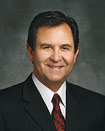


This weekend was amazing! Here's a short list of the reasons why:

Saturday
  • We visited two home improvement stores as a family selecting materials for our day projects, and the children were well-behaved (and excited to choose seeds to plant)
  • My two older children helped me drill and prepare wood planks for additional garden plots
  • My wife and daughter worked by my side all afternoon gardening, weeding, planting, and constructing a new garden, all while the boys played nicely together
  • We planted two cute citrus trees (Meyer lemon and Key lime)

Garden and addition (with trellis!)


Lemon/Lime Tree (w/ flowers)

It came with fruit, too!


Sunday
  • My children went around the church rooms setting up chairs for classes while my wife and I sang in choir practice
  • Our eighteen-month-old let my wife leave him in nursery so she could join me in the class we team-teach
  • Our class was engaged and happy to join our lesson discussion
  • We had a nice dinner and visit with friends from church

I know lists are hard to read (and often boring), but I wanted to quickly share the things that stood out to me from this weekend that helped to make it amazing for me. We didn't go on a cruise, we didn't go to the beach, we didn't even go to the temple: we simply stayed near home working on projects (Saturday) and serving others (Sunday).

And I'm not alone in finding fantastic what others may see as a mundane weekend--my wife thought it was a perfect weekend, too! (We really are meant for each other if we find such bliss in hard work in the yard together.)

As I reviewed Brother Ochoa's remarks on priesthood service, two sentences stood out to me and reminded me of the weekend I'm still giddy about:


You know that you are at your best when you are in the service of God. You know that you are happiest when you are anxiously engaged in good work.


Gardening is good work, and we were definitely anxiously engaged in it this weekend, so we were our happiest. Further, we were our best smiling selves on Sunday serving in choir, setting up chairs, and teaching lessons.

So, yes, we had an amazing weekend. And thanks to Brother Ochoa, I understand why it was so amazing!

Friday, July 27, 2012

The Rescue for Real Growth

This entry is part of my general conference application series.

The Rescue for Real Growth, by Richard C. Edgley
Recently Released First Counselor in the Presiding Bishopric


I had a few home teaching companions as a teenager. I recall visiting Church members with my father for about two years before I was replaced by my younger brother. At that time, I became the companion to Kimball Boone, a recently-returned missionary who happened to be the son of a family I greatly respected. I know we were assigned to visit a few families, but I mostly remember one.

She was a single mother with one son who lived in Gretna, NE, about seven miles from my home (but it seemed much farther back then). My companion dutifully scheduled appointments, picked me up, drove to her home, and climbed the stairs to her second-floor apartment with me each month. However, besides visiting her in her home once and meeting her near a soccer field behind the apartment building, I don't think we saw her any more times. But we kept coming.

On one of our visits, I probably questioned why we should keep coming if we were never received (I may or may not have had the teenager whine when I asked). I remember my companion getting a far-off look as if he were silently pondering what to say. He unzipped and opened a pocket on his scripture bag, and took out an oversized index card with a hand-written note on it. He asked me to read it. Here's what I remember it saying:

Truly the worth of souls is great. To save the souls of those who have strayed from the fold is just as worthy and commendable, and causes just as much rejoicing in heaven as to save souls in far-off parts of the world. -Joseph F. Smith


After I read it aloud, he told me that he thought of this quote often on his full-time mission and testified that he knew it was true. He then invited me to keep the card—I'm sure he didn't need it because he had not only committed it to memory, but had internalized its message, too.

I kept that card in my scripture bag pocket as I prepared for my mission, served my mission, and returned home from my mission. It helped prepare me for meaningful missionary experiences in Idaho among those new to the gospel as well as those returning to church.

I'm sad to report that I recently searched for the card so I could finally try to verify the source—I only remember it as quoted above—and couldn't find it. I did search for the quote, but could only find this:


As it has been expressed here time and again, it is better for us to save our own boys who are being misled at home, than it is for us to go out into the world . . . Yet a soul saved out in the world Is as precious in the sight of God as a soul saved at home. But we have work to do right at home, at our own doors; and it will not do for us to neglect the work necessary to be done at our own thresholds, and then go out, into the world to do work that is no more necessary. Let us do our duty everywhere. (Joseph F. Smith, Conference Report, October 1902, p.87)


It may be nostalgic, but I prefer the quote as I remember it.

I was reminded of this experience as I reviewed Bishop Edgley's words. He taught that "reactivation has always been an important part of the work of the Lord." He shared an encounter he had with a reactivated older man who related that while he was back now and working in the temple with his wife, much was missing. This man said:


All is not well. I am back in the Church, but I have lost all of my children and my grandchildren. And I am now witnessing the loss of my great-grandchildren—all out of the Church. All is not well.


I've heard of the generational effect of activity (or inactivity), but hadn't connected it to the "worth of souls" before. Let me clarify, of course I thought of the "worth of souls" in missionary efforts, but I mostly was thinking of the worth of the individual, not their posterity. Bishop Edgley seems to have been changed by his interaction with this man (as I hope I am, too):


I have had the privilege of rescuing a few less-active members over my lifetime. Now when I help bring one back to Church activity, I don’t visualize a single soul; I see six, seven, or more generations—thousands of souls. And then I think of the scripture: “Bring, save it be one soul unto me, how great shall be your joy” (D&C 18:15).


My erstwhile home teaching companion was right: the worth of souls is great! While making efforts to lovingly help others return to the fold, we may not only be helping "the one," but thousands more besides!

Suddenly I want to hug my children and help my family stay on the path!

After all, they're worth quite a lot!

Thursday, July 26, 2012

The Powers of Heaven

This entry is part of my general conference application series.

The Powers of Heaven, by David A. Bednar
Of the Quorum of the Twelve Apostles


I enjoy the Priesthood Session of General Conference. I've been taking my eldest son with me for some time, and I love having him sit next to me. I love even more that he actually wants to come, too! While I don't recall if the hymn "Rise Up, O Men of God" was sung, but I had it in my mind as I sat where I was supposed to be, doing what I was supposed to be doing (with a young companion as well).

Elder Bednar reminded that the divine authority of the priesthood is the most distinguishing feature of the Church of Jesus Christ of Latter-day Saints. He continues:


We make the distinctive declaration that priesthood authority has been conferred by the laying on of hands directly from heavenly messengers to the Prophet Joseph Smith.


I've seen a magazine cover in the news recently that uses an image representing this conferral of priesthood authority to satirize the Church and how it uses its finances (article about the satirical approach, link; the article itself, link)

Interestingly, the article that the controversial magazine cover advertises isn't seen as being satirical, although the cover is. This reminds me of a story Elder Bednar told: He recounts how his father wasn't a member of the Church, and that he—a young Elder Bednar—would frequently ask him when he was going to be baptized. The response was always, "I will join the Church when I know it is the right thing to do."

In his teenage years, Elder Bednar asked the question after returning home from church. Instead of the normal response, his father responded with a question:


"David, your church teaches that the priesthood was taken from the earth anciently and has been restored by heavenly messengers to the Prophet Joseph Smith, right?" I replied that his statement was correct. Then he said, "Here is my question. Each week in priesthood meeting I listen to the bishop and the other priesthood leaders remind, beg, and plead with the men to do their home teaching and to perform their priesthood duties. If your church truly has the restored priesthood of God, why are so many of the men in your church no different about doing their religious duty than the men in my church?" My young mind immediately went completely blank. I had no adequate answer for my dad.


To stretch an analogy to the article and magazine cover, in this group of men, some weren't showing on the outside what they aspired to be on the inside. This is similar to a supposed-legitimate article lessened by an over-the-top satirical cover image.


Is it fair to "judge the Church's claim to divine authority by the shortcomings of [certain] men"? I'm reminded of something Elder Oaks said (link to article)


A person who has had a bad experience with a particular electrical appliance should not forego using the power of electricity.

Funny as Elder Oaks' quote is, I think electrical appliances should still do their best! Elder Bednar might agree (so long as we shift the topic to priesthood holders):


Men who bear God’s holy priesthood should be different from other men. Men who hold the priesthood are not inherently better than other men, but they should act differently.


After listening to Elder Bednar testify of the need for priesthood holders (like me) to be equal partners in the home and examples of righteousness, I dutifully and enthusiastically said, "Amen!" In my notes I drew the following figure of a priesthood holder rising from prayer to fulfill his responsibilities:


NOTE: the picture I drew in my notes had a stick figure, but you get the idea!

Can I "Rise UP!" to meet priesthood responsibilities? (I think I'm already different from other men, I just hope I'm also different in a good priesthood sort of way.)

I can't end this post with the tremendous cliffhanger of Elder Bednar's father continually rejecting his invitation to be baptized! Elder Bednar provided some closure for you (and me):


You may be interested to know that a number of years later, my father was baptized. And at the appropriate times, I had the opportunity to confer upon him the Aaronic and the Melchizedek Priesthoods. One of the great experiences of my life was observing my dad receive the authority and, ultimately, the power of the priesthood.


Rise Up, O Men of God!

Wednesday, July 25, 2012

How to Obtain Revelation

This entry is part of my general conference application series.

How to Obtain Revelation and Inspiration for Your Personal Life, by Richard G. Scott
Of the Quorum of the Twelve Apostles


Who doesn't enjoy a laugh every now and again? I know I do!

A colleague and I were discussing some of fun benefits of living in Florida this morning. I mentioned this picture of alligators featuring an interesting sign:


The picture is funny because of how absurd it seems! It depicts a potential situation where caution would definitely be needed. (And I might prefer going against a vehicle instead of a pack of gators!)

Speaking of humor and caution, in his talk on receiving revelation, Elder Scott counseled:


Be cautious with humor. Loud, inappropriate laughter will offend the Spirit. A good sense of humor helps revelation; loud laughter does not. A sense of humor is an escape valve for the pressures of life.


My wife visited a dental specialist lately and was amused by one question: Do you have a stressful life?

Her reply: I have four children, what do you think?

This reminds me of a talk by Elder Andersen: link

(NOTE: I wasn't there, so I don't know exactly what her response was, but I think she would have said something like this.)

Returning to Elder Scott's advice: I'm not sure I've ever thought of humor being related to revelation. If it is, I hope I'm not in the "loud, inappropriate laughter" camp!

I guess it makes sense, though. If our lives are full of stress, we may not 1) make time to seek revelation, or 2) be able to hear/feel any guidance over stress-induced high blood pressure. In stressful times, the "escape valve for the pressures of life" that humor provides is appreciated.

I admit that this post isn't shaping up to be a barrel of laughs, so I'm apparently not much help if you're having a stress-filled time right now, so I'll wrap this up so you can seek appropriate humor elsewhere: The next time I'm stressing over a situation where I desire divine guidance, after reading the scriptures, pondering, and praying, I'll think I'll ask my children if they know any good jokes.

After all, I have four children. And if life is sometimes stressful because of them, they are good for a laugh! (Here's a post that has pictures of them being altogether cute: link)

Thursday, July 19, 2012

In Tune with the Music of Faith

This entry is part of my general conference application series.

In Tune with the Music of Faith, by Quentin L. Cook
Of the Quorum of the Twelve Apostles


With young children, it seems that you're either trying to convince them to tell the truth, or to not be so honest with others. Most situations involving the first (to tell the truth) have to do with the child not wanting to get in trouble and fabricating a story to get out of something. Situations for the second (to not be so honest) are a different flavor altogether.

As I sat in front of a nine-yr-old girl in Church on Sunday, she leaned forward and whispered in my ear, "You know you're going bald, right?"

Thanks.

My wife and I think that this girl likes to try to get a reaction from people by making over-the-top "honest" comments. She probably wasn't satisfied with my response, though: "I know; isn't it great! I often wish all my hair would just fall out so I could be beautifully bald!"

My six-yr-old daughter is starting to learn that she doesn't always have to say whatever she's thinking, however honest it is. Some time ago, after I finished working in the yard, she found me without a shirt on. Her honest question was, "Daddy, why does your tummy jiggle so much when you walk?"

Sensing no guile, I answered honestly, "Probably because I'm fat."

Keeping up the honest theme, I recall her reply, "Yeah, you're fat and Mommy isn't."

I'm forgiving.

I say that she's learning to temper her honest comments because yesterday I was again without a shirt after doing yard work. Remembering our previous conversation, I apologized to her that she had to see her fat Daddy walking around. Her reply, "Daddy, you're not fat!" (NOTE: Yes I am.)

I smiled at her polite political response, but smiled even more when her four-yr-old brother chimed in, "Daddy, you are fat!"

Good thing some of us fat guys are known for being jolly. (If only I had a troupe of elves to help around the house/workshop.)

Children can be brutally honest. Which takes me to Elder Cook's talk.

When, as a family, we watched Elder Cook speak in conference, a combination of the lighting, the video feed, and the natural terrain of his scalp made for an ... interesting sight. Right after I noticed this, my daughter let us know she noticed too: "His head is bumpy!"

Coincidentally, this was right before Elder Cook said:

Remember, it is not up to us to judge.


I hope it's okay to notice that someone's head looks bumpy, so long as you don't judge them because of it. What do you think?


We have a few other funny stories of our sweet, honest daughter making sweet, honest comments to others (who may not have taken her words as sweet at all!), but we've tried to lovingly teach our children that it's good to be honest, but it's also good to not hurt others' feelings. I suppose we could pounce on our children when they make mistakes and blow things way out of proportion (I'm sure we do do this sometimes—and no, I didn't just say doodoo). In fact, Elder Cook said something about this as well (I emphasized one part):


Our great desire is to raise our children in truth and righteousness. One principle that will help us accomplish this is to avoid being overly judgmental about conduct that is foolish or unwise but not sinful. . . it [is] important to distinguish between youthful mistakes which should be corrected and sins that require chastening and repentance. Where there is lack of wisdom, our children need instruction. Where there is sin, repentance is essential.


I think we're doing well, but there I'm sure I have room for improvement. As I try to teach my children in "truth and righteousness," I need to remember to be an example. Elder Cook reminds:


Example is particularly important. What we are speaks so loudly that our children may not hear what we say.


Parenthood can be great fun with honest children, even with too-honest children. I want to live so that who I am coincides with what I'm trying to say, so my children want to listen.

Because, after all, I'm listening to them. And I'm also listening to all the funny things they say when they're being honest!