
Saturday, June 4, 2011
May Pictures
Our days in Texas are running out, and it looks like we're making the most of it (judging by our May pictures, link)! Come take a look:
Sunday, May 15, 2011
Yard Sale Saturday!
We had our trying-to-prepare-for-an-eventual-move yard sale yesterday. We were more interested in getting rid of accumulated junk... er, treasures, than we were with making loads of money. This was evidenced by our tables of 25¢ (or 5 for $1) clothes, toys, and books.
Here is a picture of our sale after the first wave of professionals swept in:

You can see a little IKEA table with a pink umbrella in the corner of the driveway. The children had a lemonade/juice/cookie stand (25¢). This was our attempt at introducing David and Rebecca to capitalism, or at least money and talking to strangers in a supervised environment. They were quite shy at first but warmed up and started approaching each of the customers to peddle their wares. (They even had a jar with a "TIPS" label where diabetic grandmas and other sweethearts gave them money.) Toward the end of our adventure they moved out to the roundabout (street-side) and waved at passers by--and occasionally clogged the street when customers stopped.
Here is a picture of the stand in the new location:

We had a great time and are loving having a more open-feeling home.
Here is a picture of our sale after the first wave of professionals swept in:

You can see a little IKEA table with a pink umbrella in the corner of the driveway. The children had a lemonade/juice/cookie stand (25¢). This was our attempt at introducing David and Rebecca to capitalism, or at least money and talking to strangers in a supervised environment. They were quite shy at first but warmed up and started approaching each of the customers to peddle their wares. (They even had a jar with a "TIPS" label where diabetic grandmas and other sweethearts gave them money.) Toward the end of our adventure they moved out to the roundabout (street-side) and waved at passers by--and occasionally clogged the street when customers stopped.
Here is a picture of the stand in the new location:

We had a great time and are loving having a more open-feeling home.
Saturday, March 26, 2011
Till We Meet Again
This entry is part of my general conference application series.
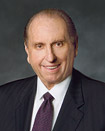
Till We Meet Again, by Thomas S. Monson
President, Church of Jesus Christ of Latter-day Saints
While we were shopping today, my older children started discussing which kind of candy they would like to have as a reward for when they hear certain words in the next general conference. I was excited by this for two reasons: 1) they were happy for general conference, and 2) it's in only a couple of weeks!
At the end of the last general conference, I produced a word cloud to see if there was an indication of the common themes that I picked up on from many talks (see it here). As I thought about doing the same for this conference, I really couldn't identify a theme—apart from being like Christ.
Because I'm a nerd, I decided to make a word cloud again. It was great fun to harvest the words from each of the talks, because as I saw the speakers and their talk titles, I would have fun flashbacks to the things that stood out to me from their talks (the things you may have read aout in the previous posts). Again, I couldn't isolate a consistent theme, but I was considerably happy.
So, while I'm not venturing any guesses at themes, do you have any in mind? What do you expect to "pop out of the screen"? Here are the most frequent 100 words from this conference:

I like that this particular representation shows the words of deity close together, seemingly increasing the impact! Other words that stand out (that are a bit larger than the others) are: life, faith, priesthood, children, know, and Church.
As you look at this representation of conference, you may have, as did I, happy feelings and pleasant memories triggered by certain words.
Are there any words that you were surprised to see? I was tickled when I noticed that the word "Mormon" actually appears in the word cloud. For ages it seems that members of the Church have avoided being labeled Mormon, but with the recent innovations to Mormon.org and the encouragement members have been given to create profiles there (see mine here), the feeling I got at seeing "Mormon" was different than I had hoped!
Okay; that's general conference as a whole, but what about President Monson's closing comments? After reviewing these wonderful general conference talks, and after considering all their words reminded me of, one paragraph of President Monson's remarks stood out the most to me:
Knowing what we know, and feeling what we feel, we may sometime wonder, "Now what?" President Monson's closing provides an answer, and a succinct and poignant close:
I love general conference!
Till We Meet Again, by Thomas S. Monson
President, Church of Jesus Christ of Latter-day Saints
While we were shopping today, my older children started discussing which kind of candy they would like to have as a reward for when they hear certain words in the next general conference. I was excited by this for two reasons: 1) they were happy for general conference, and 2) it's in only a couple of weeks!
At the end of the last general conference, I produced a word cloud to see if there was an indication of the common themes that I picked up on from many talks (see it here). As I thought about doing the same for this conference, I really couldn't identify a theme—apart from being like Christ.
Because I'm a nerd, I decided to make a word cloud again. It was great fun to harvest the words from each of the talks, because as I saw the speakers and their talk titles, I would have fun flashbacks to the things that stood out to me from their talks (the things you may have read aout in the previous posts). Again, I couldn't isolate a consistent theme, but I was considerably happy.
So, while I'm not venturing any guesses at themes, do you have any in mind? What do you expect to "pop out of the screen"? Here are the most frequent 100 words from this conference:

I like that this particular representation shows the words of deity close together, seemingly increasing the impact! Other words that stand out (that are a bit larger than the others) are: life, faith, priesthood, children, know, and Church.
As you look at this representation of conference, you may have, as did I, happy feelings and pleasant memories triggered by certain words.
Are there any words that you were surprised to see? I was tickled when I noticed that the word "Mormon" actually appears in the word cloud. For ages it seems that members of the Church have avoided being labeled Mormon, but with the recent innovations to Mormon.org and the encouragement members have been given to create profiles there (see mine here), the feeling I got at seeing "Mormon" was different than I had hoped!
Okay; that's general conference as a whole, but what about President Monson's closing comments? After reviewing these wonderful general conference talks, and after considering all their words reminded me of, one paragraph of President Monson's remarks stood out the most to me:
How blessed we are to have the restored gospel of Jesus Christ. It provides answers to questions concerning where we came from, why we are here, and where we will go when we pass from this life. It provides meaning and purpose and hope to our lives.
Knowing what we know, and feeling what we feel, we may sometime wonder, "Now what?" President Monson's closing provides an answer, and a succinct and poignant close:
May we show increased kindness toward one another; may we ever be found doing the work of the Lord.
I love general conference!
Friday, March 25, 2011
O That Cunning Plan of the Evil One
This entry is part of my general conference application series.
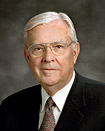
O That Cunning Plan of the Evil One, by M. Russell Ballard
Of the Quorum of the Twelve Apostles
Have you ever smelled someone who passed by or that you live/work with that was experiencing a time of bad body odor? Each time I do I wonder if I smell bad to others but just can't smell myself, and no one has had the heart to tell me about it.
As I ride my bike to/from work, I can smell if a person in a passing car is smoking, even if they travel by at 50 mph. Similarly, I can tell if a person smokes, or lives in a smoking home, even if they're not currently smoking by the tell-tale signs and smells.
I thought of these two things as I read Elder Ballard's talk. Sometimes what is readily apparent to others (e.g. bad smells or indicators of addictive behavior) is criticized or stigmatized quite heavily, when there is the possibility of much greater evils or addictions that aren't apparent.
It's fairly easy to determine if someone is addicted to smoking, but you may not know if someone else is secretly addicted to gambling.
You may pick up on the visible signs that someone is addicted to drugs, but will not know that someone else spends hours a day involved in addictive pornographic behaviors.
You may perceive someone who is apparently addicted to bad or unhealthy foods, but you may not recognize your own addiction(s) (say, addicted to a cell phone).
Addiction seems to be something that is readily despised in others, but hard to distinguish in self.
As he compared the addictive lures of Satan to the flies of a fly fisherman, video clips showed in the background of Elder Ballard's talk. I liked the combination of the allegory and the imagery:
When we think of addiction, we often think of those things that are harmful, dirty, evil, or generally shunned by society; however, is it possible to be addicted to something that seems good? To answer this, let's take a look at the definition, given here by Elder Ballard and followed by some useful application:
It seems obvious that regardless of the substance or behavior, as soon as we give up our agency, the road becomes downhill to a bad place. Later, Elder Ballard included the following:
So, what are you going to do now? Here is an apostle saying that video games and cell phones should be included with alcohol, tobacco, pornography, and harmful drugs (including misused prescription drugs).
A few days ago, I removed many games and other applications from my cell phone (read more here). I did this, in part, because of Elder Mazzagardi's words. The more motivating factor, though, was that my wife brought it up. It likely wasn't easy for her to do; how do you convince someone that what they think is harmless can be habit-forming and ultimately addicting?
If you're wondering how to know if something seemingly harmless is addictive, consider what you would do if a loved one asked you to give it up, or at least trim it back considerably. If you would react with disbelief (commonly called denial), chances are, you are on the road to addiction.
The bottom line seems to be that addiction is dangerous, despite its flavor.
If you are concerned about addiction—and you should be!—Elder Ballard has an answer:
Although not mentioned explicitly in this talk, be aware that some addictions need professional help in addition to faith and fervent prayer.
I'm grateful for the reminder of the very real powers of temptation and addiction. Scary as it is that something so tempting and appetizing, no matter what it is, can lead to addiction and ruin, it's wonderful to be reminded that the Atonement of Christ provides safety, protection, and a way back, if necessary.
O That Cunning Plan of the Evil One, by M. Russell Ballard
Of the Quorum of the Twelve Apostles
Have you ever smelled someone who passed by or that you live/work with that was experiencing a time of bad body odor? Each time I do I wonder if I smell bad to others but just can't smell myself, and no one has had the heart to tell me about it.
As I ride my bike to/from work, I can smell if a person in a passing car is smoking, even if they travel by at 50 mph. Similarly, I can tell if a person smokes, or lives in a smoking home, even if they're not currently smoking by the tell-tale signs and smells.
I thought of these two things as I read Elder Ballard's talk. Sometimes what is readily apparent to others (e.g. bad smells or indicators of addictive behavior) is criticized or stigmatized quite heavily, when there is the possibility of much greater evils or addictions that aren't apparent.
It's fairly easy to determine if someone is addicted to smoking, but you may not know if someone else is secretly addicted to gambling.
You may pick up on the visible signs that someone is addicted to drugs, but will not know that someone else spends hours a day involved in addictive pornographic behaviors.
You may perceive someone who is apparently addicted to bad or unhealthy foods, but you may not recognize your own addiction(s) (say, addicted to a cell phone).
Addiction seems to be something that is readily despised in others, but hard to distinguish in self.
As he compared the addictive lures of Satan to the flies of a fly fisherman, video clips showed in the background of Elder Ballard's talk. I liked the combination of the allegory and the imagery:
The goal of the fly fisherman is to catch trout through skillful deception. The adept fisherman studies trout behavior, weather, the water current, and the types of insects trout eat and when those insects hatch. He will often craft by hand the lures he uses. He knows these artificial insects embedded with tiny hooks need to be a perfect deception because the trout will identify even the slightest flaw and reject the fly.
What a thrill it is to watch a trout break the surface of the water, inhale the fly, and resist until it is finally exhausted and reeled in. The test is the pitting of the fisherman’s knowledge and skill against the noble trout.
The use of artificial lures to fool and catch a fish is an example of the way Lucifer often tempts, deceives, and tries to ensnare us.
Like the fly fisherman who knows that trout are driven by hunger, Lucifer knows our “hunger,” or weaknesses, and tempts us with counterfeit lures which, if taken, can cause us to be yanked from the stream of life into his unmerciful influence.
When we think of addiction, we often think of those things that are harmful, dirty, evil, or generally shunned by society; however, is it possible to be addicted to something that seems good? To answer this, let's take a look at the definition, given here by Elder Ballard and followed by some useful application:
According to the dictionary, addiction of any kind means to surrender to something, thus relinquishing agency and becoming dependent on some life-destroying substance or behavior.
Researchers tell us there is a mechanism in our brain called the pleasure center. When activated by certain drugs or behaviors, it overpowers the part of our brain that governs our willpower, judgment, logic, and morality. This leads the addict to abandon what he or she knows is right. And when that happens, the hook is set and Lucifer takes control.
It seems obvious that regardless of the substance or behavior, as soon as we give up our agency, the road becomes downhill to a bad place. Later, Elder Ballard included the following:
Remember, brothers and sisters, any kind of addiction is to surrender to something, thus relinquishing agency and becoming dependent. Thus, video-gaming and texting on cell phones need to be added to the list.
So, what are you going to do now? Here is an apostle saying that video games and cell phones should be included with alcohol, tobacco, pornography, and harmful drugs (including misused prescription drugs).
A few days ago, I removed many games and other applications from my cell phone (read more here). I did this, in part, because of Elder Mazzagardi's words. The more motivating factor, though, was that my wife brought it up. It likely wasn't easy for her to do; how do you convince someone that what they think is harmless can be habit-forming and ultimately addicting?
If you're wondering how to know if something seemingly harmless is addictive, consider what you would do if a loved one asked you to give it up, or at least trim it back considerably. If you would react with disbelief (commonly called denial), chances are, you are on the road to addiction.
The bottom line seems to be that addiction is dangerous, despite its flavor.
If you are concerned about addiction—and you should be!—Elder Ballard has an answer:
To those who are dealing with an addiction personally or within your family, I repeat, fervent prayer is key to gaining the spiritual strength to find peace and overcome an addictive craving. Heavenly Father loves all of His children, so thank Him and express sincere faith in Him. Ask Him for the strength to overcome the addiction you are experiencing. Set aside all pride and turn your life and your heart to Him. Ask to be filled with the power of Christ’s pure love. You may have to do this many times, but I testify to you that your body, mind, and spirit can be transformed, cleansed, and made whole, and you will be freed. . .
And for those of you who have fallen prey to any kind of addiction, there is hope because God loves all of His children and because the Atonement of the Lord Jesus Christ makes all things possible.
Although not mentioned explicitly in this talk, be aware that some addictions need professional help in addition to faith and fervent prayer.
I'm grateful for the reminder of the very real powers of temptation and addiction. Scary as it is that something so tempting and appetizing, no matter what it is, can lead to addiction and ruin, it's wonderful to be reminded that the Atonement of Christ provides safety, protection, and a way back, if necessary.
Tuesday, March 22, 2011
What Have You Done with My Name?
This entry is part of my general conference application series.
What Have You Done with My Name?, by Mervyn B. Arnold
Of the Seventy

Each of my children are named after ancestors. While I think I'm super, I doubt I'm named after Superman's alter-ego, Clark Kent; I don't recall why I was named Clark, but I don't think it's after anyone in particular (I called my parents for a reminder, but couldn't find them at home). My children have an advantage that I don't have: they can live up to the good names of those who have gone before.
Regardless of what your first name is, Elder Arnold reminds that you, too, can live up to a great name:
This reality was captured in a song that I'm very familiar with. From the 1995 Especially for Youth album, Kenneth Cope's "What Have I Done With His Name" outlines a progression of names we could have been named after or called. Take a listen here:
It's one thing to remember those who have gone before and consider them asking what you have done with their name; it's another thing entirely to consider how our own names will be remembered in time. . . say in 600 years! The answer to this consideration may, in large measure, depend on the choices we make and how well we understand that choices have consequences. Elder Arnold shared a story from his wife's life that helped her understand that while we are free to make our own choices, we cannot choose the consequences:
As a 15-year-old, she was a typical teenager, upset to be working at her father's ranch instead of enjoying time with friends in the summertime. One of her tasks was to ensure that the cows didn't press the fence separating their grazing area from the tempting wheat field adjacent. As alluring as the wheat was, she had been taught that if a cow ate wheat—particularly too much wheat—it would bloat, suffocating and killing the cow. Because of this, she would regularly patrol the separating fence, keeping a watchful eye, particularly on one cow that seemed determined to get to the wheat.

The expected happened. The cow pressed through the fence, ate too much wheat, bloated, and ultimately perished because of it all, despite the frantic efforts of all to save the cow in time.
While I don't have any experience with wheat fields and their peril to cows, I am grateful for this powerful connective story between choices and consequences. Do I stray from the pasture and sample the forbidden wheat, tarnishing my name(s)? I'm grateful for the reminder that "our Savior invites us on a daily basis to cleanse our names and return to His presence."
Something Elder Arnold said reminded me of another song, this one from my children's involvement in Primary:
The beautiful song this reminds me of is titled, "If the Savior Stood Beside Me" (read more about this song here). Here's a video:
What Have You Done with My Name?, by Mervyn B. Arnold
Of the Seventy
Each of my children are named after ancestors. While I think I'm super, I doubt I'm named after Superman's alter-ego, Clark Kent; I don't recall why I was named Clark, but I don't think it's after anyone in particular (I called my parents for a reminder, but couldn't find them at home). My children have an advantage that I don't have: they can live up to the good names of those who have gone before.
Regardless of what your first name is, Elder Arnold reminds that you, too, can live up to a great name:
Each week as we partake of the sacrament, we covenant and promise that we are willing to take upon us the name of Christ, always remember Him, and keep His commandments. If we are willing to do so, we are promised that most wonderful blessing—that His Spirit will always be with us.
. . . someday each one of us will have to account to our Savior, Jesus Christ, for what we have done with His name.
This reality was captured in a song that I'm very familiar with. From the 1995 Especially for Youth album, Kenneth Cope's "What Have I Done With His Name" outlines a progression of names we could have been named after or called. Take a listen here:
It's one thing to remember those who have gone before and consider them asking what you have done with their name; it's another thing entirely to consider how our own names will be remembered in time. . . say in 600 years! The answer to this consideration may, in large measure, depend on the choices we make and how well we understand that choices have consequences. Elder Arnold shared a story from his wife's life that helped her understand that while we are free to make our own choices, we cannot choose the consequences:
As a 15-year-old, she was a typical teenager, upset to be working at her father's ranch instead of enjoying time with friends in the summertime. One of her tasks was to ensure that the cows didn't press the fence separating their grazing area from the tempting wheat field adjacent. As alluring as the wheat was, she had been taught that if a cow ate wheat—particularly too much wheat—it would bloat, suffocating and killing the cow. Because of this, she would regularly patrol the separating fence, keeping a watchful eye, particularly on one cow that seemed determined to get to the wheat.

The expected happened. The cow pressed through the fence, ate too much wheat, bloated, and ultimately perished because of it all, despite the frantic efforts of all to save the cow in time.
"We had provided her with a beautiful mountain pasture to graze in and a fence to keep her away from the dangerous wheat, yet she foolishly broke through the fence and caused her own death.
“As I thought about the role of the fence, I realized that it was a protection, just as the commandments and my parents’ rules were a protection. The commandments and rules were for my own good. I realized that obedience to the commandments could save me from physical and spiritual death. That enlightenment was a pivotal point in my life.”
While I don't have any experience with wheat fields and their peril to cows, I am grateful for this powerful connective story between choices and consequences. Do I stray from the pasture and sample the forbidden wheat, tarnishing my name(s)? I'm grateful for the reminder that "our Savior invites us on a daily basis to cleanse our names and return to His presence."
Something Elder Arnold said reminded me of another song, this one from my children's involvement in Primary:
Before you act, picture the Savior standing at your side and ask yourself, “Would I think it, would I say it, or would I do it knowing He is there?” For surely He is there. Our beloved President Thomas S. Monson, who I testify is a prophet, often quotes the following verse of scripture when speaking of our Lord and Savior: “For I will go before your face. I will be on your right hand and on your left, and my Spirit shall be in your hearts.”
The beautiful song this reminds me of is titled, "If the Savior Stood Beside Me" (read more about this song here). Here's a video:
Subscribe to:
Posts (Atom)


