Sunday, February 27, 2011

The Three Rs of Choice

This entry is part of my general conference application series.

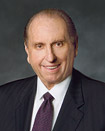
The Three Rs of Choice, by Thomas S. Monson
President, Church of Jesus Christ of Latter-day Saints

I always seem drawn to talks that discuss agency (or choice) for some reason; it's as if I have no choice on the matter. . .

I was asked to give a talk years ago on agency and adversity. I had a great time preparing the talk, but decided to leave a chunk of the talk out because it was too opinion-based; I thought it would be more appropriate in Sunday School, to throw the class off on an irreparable tangent. Because this is a blog, I thought I would revisit the omitted portion of the talk. It turns out that I found it in less than ten seconds! Here are/were my thoughts on agency, which I share to give some explanation to my fascination with the topic:

Before this life, while in the premortal council, Satan “sought to destroy the agency of man” (Moses 4:3) with a proposed amendment to Heavenly Father's plan for His children. Agency is central to that plan, being requisite “otherwise there is no existence” (see D&C 93:30-31); the destruction of agency would ultimately make salvation impossible. While we do not know exactly by what means Satan sought to destroy agency, theories abound.

Many maintain that Satan’s idea was to force all the children of our Father in Heaven to live righteous lives, and somehow he (Satan) would have all of the glory. Personally, I feel that this idea is not in harmony with the many manifestations of Satan’s methods currently being employed to lead us astray. Rather, I propose that Satan wanted to somehow eliminate the negative consequences of agency. I imagine that his idea was that he would suffer—yes, there would be a Savior who would take all of the glory to himself—but he wanted somehow to alter the prescribed rules of the universe such that with him as Savior, his role would be sufficient to save all, regardless of their actions. This idea is seen too prevalently in today’s societies. Here are two examples:
  1. Many religions teach that all that is required is to confess the name of a savior, yet give no standard of living in everyday life (e.g. consequences of wrong choices cannot keep us from our salvation); and,

  2. Too often we try to somehow pass the blame of our actions to others; somehow trying to eliminate the consequences of our actions. This reminds me of the young man who came home with a quite pitiful report card. He finally shared the results with his parents and asked where they thought the blame lied, “What do you think the cause is: heredity or environment?”

I cannot understand how someone (Satan) who was so gung-ho about righteousness that he was willing to ultimately leave the presence of the Father with a third of the hosts of heaven could immediately begin teaching us on earth to:

Eat, drink, and be merry; nevertheless, fear God—he will justify in committing a little sin; yea, lie a little, take the advantage of one because of his words, dig a pit for thy neighbor; there is no harm in this; and do all these things, for tomorrow we die; and if it so be that we are guilty, God will beat us with a few stripes, and at last we shall be saved in the kingdom of God. (2 Ne 28:8)

To me, this sounds more like the result of someone wanting to get rid of consequences, rather than force others to do right.

In his talk, President Monson categorized the various aspects of agency/choice into three categories:

The Right of Choice
This aspect was referred to earlier: agency is central to Heavenly Father's plan. In fact, President David O. McKay's famous quote reminds: "Next to the bestowal of life itself, the right to direct that life is God's greatest gift to man." When Lucifer proposed his amendment to the Great Plan of Salvation, "he seemed not to recognize—or perhaps not to care—that . . . none would be any wiser, any stronger, any more compassionate, or any more grateful if his plan were followed."

Because the Plan includes the Atonement of Christ, this great universal gift of agency (or choice) is operational; "within the confines of whatever circumstances we find ourselves, we will always have the right to choose."

The Responsibility of Choice
President Monson is known for being well-read and using sometimes-humorous references in his talks. Such is the case with the responsibility of choice. Funny as the reference is, it is spot-on.

He reminds of the classic Alice's Adventures in Wonderland, which many may be familiar because of the film adaptations (I am). When lost and at a crossroads, Alice meets the Cheshire cat and asks the cat which path she should follow. You'll remember the rest:

The cat answers, “That depends where you want to go. If you do not know where you want to go, it doesn’t matter which path you take.”


President Monson provides the connection:

Unlike Alice, we all know where we want to go, and it does matter which way we go, for by choosing our path, we choose our destination.

Decisions are constantly before us. To make them wisely, courage is needed—the courage to say no, the courage to say yes. Decisions do determine destiny.

The Results of Choice
Life can be thought of as one choice after another. Some have more significance than others. President Monson reminds of what is really important:

May we keep our eyes, our hearts, and our determination focused on that goal which is eternal and worth any price we will have to pay, regardless of the sacrifice we must make to reach it. . . Eternal life in the kingdom of our Father is your goal. Such a goal is not achieved in one glorious attempt but rather is the result of a lifetime of righteousness, an accumulation of wise choices, even a constancy of purpose. As with anything really worthwhile, the reward of eternal life requires effort.

Despite what some individuals and societies may believe, decisions do have consequences, and we cannot escape them. Please note, however, that the use of the word consequences does not necessarily carry only negative implications; eternal life is a consequence of a lifetime of righteousness!

I'm grateful for agency and choice. While we may sometimes wish we could escape the immediate results of our mistakes or bad decisions, there is comfort in knowing that forgiveness comes through Christ, and that because of Him we can ultimately obtain eternal life through the right, responsibility, and results of choice!

Tuesday, February 22, 2011

Serve with the Spirit

This entry is part of my general conference application series.

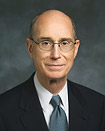
Serve with the Spirit, by Henry B. Eyring
Of the Quorum of the Twelve Apostles


My son, Andrew, is named after two of his ancestors who first heard, accepted, and embraced the restored gospel.

Andrew Lafayette Siler was born in December of 1824 in Sweet Water, Tennessee, was baptized on Valentines Day in 1850, and died in Kanab, Utah in 1898. Between those times he lived a full life.

William Dickinson Pratt (elder brother of Parley P. Pratt) was born in September of 1802 in Wooster, New York, joined the Church and went through the temple in Nauvoo in December 1845, and died in Salt Lake in 1870. He, likewise, lived a full life among these few events.

What ties these men together is their connection to our family. They both served the Lord with the Spirit, helped lead their families in righteousness, and because of their influence (and others'), five generations later, my wife and I met in an English class, fell in love, and were sealed in the Salt Lake Temple.


President Eyring tells the stories of two of his ancestors who accepted the gospel because missionaries served with the Spirit. These two met on the trail to Utah, fell in love, and were married. Unlike President Eyring, I don't know how many descendants the two in our family histories have, I am grateful for them:

I am among the tens of thousands of descendants of that boy and that girl who bless the names of two priesthood holders who brought the ministrations of the Spirit of God with them.

We named our youngest son after the two mentioned above (the others were also named from individuals in family history). It's fun to think that those two men set in motion part of something great the ultimately led to the creation of our little family (of course they were just two of many ancestors). I'm grateful for them and what the many things they did—much of their lives are a mystery to me! Despite the unknowns, I'm grateful for what I do know: that they had many times when they went forward doing what the Lord called them to do. The self-application of their example is President Eyring's message:

My message for us tonight is this: let us do whatever is required to qualify for the Holy Ghost as our companion, and then let us go forward fearlessly so that we will be given the powers to do whatever the Lord calls us to do.

I don't usually think of my accomplishments and my daily life from the lens of those five generations out, but if I did, I might imagine them looking back thanking me and my wife for what we did for them (along with others). This is a new and interesting way to consider service in the Church and doing what the Lord asks me to do!

Monday, February 21, 2011

Pride and the Priesthood

This entry is part of my general conference application series.

Pride and the Priesthood, by Dieter F. Uchtdorf
Second Counselor in the First Presidency


As I saw the title of this talk, "Pride and the Priesthood," I thought of another P&P. I think I may be a strange husband in that I enjoy the Austen-esque films like Pride and Prejudice. Sometimes when we have an evening to share (a rarity), my wife will ask what film I would like to see, and I will pull one of our many films of this genre out of the cupboard (we even have multiple versions of some titles). She usually asks, "You really want to watch that?", and then she smiles at my sheepish grin.

Watching the effects of pride in others' lives can be painful, cathartic, or even funny, if put in the right plot line; however, recognizing pride in ourselves can be another thing entirely! While I don't remember the actual talk that President Benson gave in 1989, I did live through its aftershocks. I well remember the scorn and, well, pride shown by some whenever they heard another use the word pride in a sentence. "Beware of pride. . ." was a common reply, even in instances where the word was used entirely appropriately. President Uchtdorf noticed this, too:

For a while it almost became taboo among Church members to say that they were “proud” of their children or their country or that they took “pride” in their work. The very word pride seemed to become an outcast in our vocabulary.

President Uchtdorf listed scriptural examples showing good uses of pride. He also pointed out that "there is a difference between being proud of certain things and being prideful." The difference, he reminded, is in comparison. It seems that as soon our attitudes drift into the "therefore I'm better than. . ." area, we are flirting with being proud in a bad way.

I enjoyed the caution against pride:

It is a gateway sin that leads to a host of other human weaknesses. In fact, it could be said that every other sin is, in essence, a manifestation of pride.

Realizing how dangerous pride is and can be, what can be done?

Here is the answer:

Pride is a switch that turns off priesthood power. Humility is a switch that turns it on. (See D&C 121:34-37)


The switch imagery makes it all seem so simple; perhaps it is. Here's President Uchtdorf's views on discovering humility:

We don’t discover humility by thinking less of ourselves; we discover humility by thinking less about ourselves. It comes as we go about our work with an attitude of serving God and our fellowman.

The final comparison to pride and humility that resonated well with me had to do with a four-color pen. This is a kind of pen he used as an airplane pilot, and it's presumably the same kind my own father used for his work when I was a small child. I well remember the magic of this pen—when one color was selected, you just had to slide the lever for another color and the first would pop inside the pen just in time for the second to descend; hours of entertainment!


President Uchtdorf used this pen as a comparison to humility in that the colors had no preference to which was used for what or how frequently. Here's what he said of his pen and the comparison pride:

With greatest reliability it performed every task I needed, no matter how important or insignificant. It was always ready to serve.

In a similar way we are tools in the hands of God. When our heart is in the right place, we do not complain that our assigned task is unworthy of our abilities. We gladly serve wherever we are asked. When we do this, the Lord can use us in ways beyond our understanding to accomplish His work.

This was a great talk with many points that I found quotable. I've gone from the works of Austen, to the outlawing of saying pride, to its burgeoning reuse, to the peril of comparison, to gateway sins, to switches, and to four-color pens. That's quite a lot for one topic. In fact, I'm pretty proud of this blog entry. Don't worry, though, I don't think I'm any better than any other blogger because of it; I'm just grateful for the ride!

Saturday, February 19, 2011

He Teaches Us to Put Off the Natural Man

This entry is part of my general conference application series.

He Teaches Us to Put Off the Natural Man, by Juan A. Uceda
Of the Seventy


The bulk of Elder Uceda's talk centers on an experience when a family lost harmony in a scripture reading session because two members (the father and a daughter) made poor choices. Tempers were lost, and feelings were hurt.

Although our family scripture times are usually great, I can see something similar happening in the future if I don't learn the lesson that Elder Uceda wants to teach. The condensed message seems to be two parts: a quote, and two scripture passages.

The quote:

Our homes have to be places where the Holy Spirit may dwell. “Only the home can compare with the temple in sacredness.”


The scriptures:

  1. King Benjamin's reminder that men can put off the natural man and become Saints through the Atonement (see Mosiah 3:19); and

  2. Part of the revelation Joseph Smith received in response to his plea for help in Liberty Jail, where the Lord outlines that the priesthood should be used only in righteousness (see D&C 121:37, 41-42)

As much as I don't want to make mistakes as a parent, I seem to continue to do so (often the same mistakes over and again). Just as the father in the story that was relayed was prompted, I often feel the same counsel: "Go and say, 'I'm sorry.'"

I'm grateful for the words of Christ and the promptings of the Holy Ghost that teach me to put off the natural man. I want to continue to improve so I have fewer and fewer times when I need to apologize; in other words, I want to be submissive, meek, humble, patient, and full of love. I'm happy that Christ teaches me how to do this and to have peace in my home!

Friday, February 18, 2011

Come unto Me with Full Purpose of Heart, and I Shall Heal You

This entry is part of my general conference application series.

“Come unto Me with Full Purpose of Heart, and I Shall Heal You”, by Patrick Kearon
Of the Seventy


Imagine living in the Arabian Peninsula as a child. Life there may have been quite different from where you were actually raised. For example, I remember running around the neighborhood barefoot; however, Elder Kearon tells of a time when he learned the importance of obeying his parents' consistent warnings to always wear shoes. While camping, he "wanted to go exploring, but [he] did not want to bother with putting on [his] shoes." He tells of rationalizing and wearing only flip-flops.


As he went off alone, he felt a sting in the arch of his foot and saw that he had been stung by a scorpion! Calling for help and rushing to the two-hours-away hospital, he thought he was going to die. He said:

I disregarded what I knew to be right. I ignored what my parents had repeatedly taught me. I had been both lazy and a little rebellious, and I paid a price for it.

As you can tell, this story has the makings of a great analogy to obedience and safety. In fact, my wonderful wife recently put together the felt board pieces shown above (and below) and presented this story in our family home evening!


Telling of another powerful story, Elder Kearon shares an experience of an old WWII veteran. This man survived a mine blast (but the driver of the vehicle they were in was killed). The moral of the story:

He learned that to survive in a minefield, you must follow exactly in the tracks of the vehicle moving ahead of you. Any deviation to the right or left could—and indeed did—prove fatal.


Have we, through rebellion or justification, been stung or wandered off of the path of safety? I take comfort in Elder Kearon's words, "Not one of you has thrown away your last chance. You can change, you can come back, you can claim mercy."(Compare to D&C 112:13)

I'm grateful for the safety and protection provided by the Atonement. I'm also grateful for the healing after stings and blasts which result from our own wrong choices. Even when we think that we're going to die (perhaps spiritually), there is a way back to safety.