Thursday, February 3, 2011

Reflections on a Consecrated Life

This entry is part of my general conference application series.

Reflections on a Consecrated Life, by D. Todd Christofferson
Of the Quorum of the Twelve Apostles
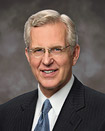

I reviewed Elder Christofferson's talk and found many quotes that I likes, but I wanted to apply the message.

Near the beginning of his address, he quoted from Man's Search for Happiness:

Life offers you two precious gifts—one is time, the other freedom of choice, the freedom to buy with your time what you will. . . your eternal reward will be according to your choosing.

I love the concept of time as currency, but don't think I'm doing as well as I should in investing my time. As I read the five elements of a consecrated life (purity, work, respect for one's body, service, and integrity), I wondered if I could claim that I have a consecrated life.

I can't.

However, I thought of someone whom I think does a wonderful job at living a consecrated life: my wife!


Let me offer five evidences that my wife lives a consecrated life:

  1. "As the Savior demonstrated, the consecrated life is a pure life." The purity of my wife seems apparent to anyone who looks at her. You can often literally see that she is glowing because of her purity! While she may deny her luminescence, she will tell you that it is because of Christ and His Atonement that she is who she is.

  2. "A consecrated life is a life of labor." While my wife doesn't hold a paying job, there's no doubt that she lives a life of labor! If "all honest work is the work of God," and "all true work is sacred," then the unquantifiable work of a loving wife and mother is beyond measure!

    A consecrated life is filled with work, sometimes repetitive, sometimes menial, sometimes unappreciated but always work that improves, orders, sustains, lifts, ministers, aspires.

  3. "A consecrated life respects the incomparable gift of one's physical body." If you ask her about this, she is likely to sing you a song from an old EFY Songs album, "Modesty is Always in Style." Not only does she sing about it, she lives it! My wife is beautiful, but she has never given in to the pressures of the world to showcase beauty in a worldly way through immodest dress or attitudes—and it's one of the things I love about her!

  4. "A consecrated life is a life of service." Closely related to the many ways that my wife works, are her countless acts of service. As Elder Christofferson said, "Those who quietly and thoughtfully go about doing good offer a model of consecration," and that is a good description of my wife.

  5. "A consecrated life is a life of integrity." I heard my father-in-law give the description of a beautiful woman: A beautiful woman is the woman who loves me!

    It's amazing that integrity increases ones beauty—especially as seen by the one whom the integrity is toward. But not only does my wife have integrity in our marriage and family, but she is like the sons of Helaman, "true at all times in whatsoever thing they were entrusted" (see Alma 53:20); she lives the Young Women's Values:

    We are daughters of our Heavenly Father, who loves us, and we love Him. We will "stand as witnesses of God at all times and in all things, and in all places" (Mosiah 18:9) as we strive to live the Young Women values, which are:
    • Faith
    • Divine Nature
    • Individual Worth
    • Knowledge
    • Choice and Accountability
    • Good Works
    • Integrity and
    • Virtue.

    We believe as we come to accept and act upon these values, we will be prepared to strengthen home and family, make and keep sacred covenants, receive the ordinances of the temple, and enjoy the blessings of exaltation.

In reminding us that we stand on the backs of giants, Elder Christofferson said:

The consecration of many who have gone before us and others who live among us has helped lay the foundation for our happiness. In like manner future generations will take courage from your consecrated life.

I'm grateful for the example of my wife's consecrated life, and I want to be more like her!

Sunday, January 30, 2011

Gospel Learning and Teaching

This entry is part of my general conference application series.

Gospel Learning and Teaching, by David M. McConkie
First Counselor in the Sunday School General Presidency


After everyone else in my house had gone to bed last night, I remained awake, looking through picture albums. I went to look for one picture, but was sucked into the albums containing pictures from my days as a full-time missionary. As I reviewed Brother McConkie's talk on learning and teaching, I reflected on the lessons I learned as a missionary and found direct correlation between what he outlined and what I tried to do.

When I served as a missionary, I tried to be a super missionary (as the picture below attests to).


What qualifies individuals to be super missionaries?

When we think of missionaries, we often consider them as strictly teachers, and rightly so. The scripture that was on the plaque that hung on my meetinghouse's wall while I was away was D&C 31:3-5, which says, in part:

Lift up your heart and rejoice, for the hour of your mission is come; and your tongue shall be loosed, and you shall declare glad tidings of great joy unto this generation. You shall declare. . . you shall begin to preach. . . yea, to reap in the field which is white already to be burned. Therefore, thrust in your sickle. . .

While there is much teaching in missionary service, it is important to also remember the counsel, "Seek not to declare my word, but first seek to obtain my word" (D&C 11:21).

Brother McConkie put it this way:

I am not going to talk about the “how” of teaching but rather about the “how” of learning. There can be a significant difference between what a teacher says and what those in the class hear or learn. . .

Successful gospel teachers love the gospel. They are excited about it. . . To teach the gospel is to share your love of the gospel. . .

Attitude is not taught; it's caught.

Brother McConkie shares four principles to develop the attitude of a successful [super] missionary or teacher. Incidentally, each of these were repeated again and again in the missionary training manuals, as well as in the and various meetings I attended:
  1. Immerse yourself in the scriptures.

  2. Apply in your life the things that you learn.

  3. Seek heaven's help.

  4. Exercise agency and act according to spiritual promptings.

While my missionary service was a nice application for me to personally understand and apply Brother McConkie's counsel, it's important to remember that this doesn't just apply to those in full-time church service: the same principles that create super missionaries create super members (or super servants, if you prefer).

As I looked through page after page of pictures from my mission, I relived many memories. Among the pictures of missionaries acting silly (e.g. dressing as Superman), were more meaningful pictures of missionary work, loving service, and smiling converts.

Teaching alone cannot produce meaningful results in the mission field, the classroom, or the home; it takes gospel learning and teaching.

Saturday, January 29, 2011

Obedience to the Prophets

This entry is part of my general conference application series.

Obedience to the Prophets, by Claudio R. M. Costa
Of the Presidency of the Seventy


If you were to ask what distinguishes the doctrine of Church of Jesus Christ of Latter-day Saints from that of the bulk of Christianity, you may get three predominant answers: 1.) that the Book of Mormon is another testament of Jesus Christ; 2.) that the Church is led by living prophets; and that 3.) there are three separate persons in the Godhead: God, the Eternal Father; his Son, Jesus Christ; and the Holy Ghost.

Elder Costa's remarks focused on the second of these: prophets. In fact, if you were a habitual counter, you would mark 51 times that the word "prophet" occurs in his talk! (That's 3.4 percent of the words in his talk.)

Like Elder Costa, I remember studying Joseph Smith's history (link). I, too, read, pondered, and prayed, and received a witness that Joseph Smith was truly a prophet. After recounting his testimony of prophets, he asked a question:

Why is it important to have living prophets to guide the true Church of Jesus Christ and its members?

By way of answering, Elder Costa recounted points from a "powerful message about obedience to the prophets" that [then] Elder Ezra Taft Benson gave at a BYU devotional. The talk is titled, "Fourteen Fundamentals in Following the Prophet" (audio, pdf). As I repeat the points here, consider which are your favorites, and why:
  1. The prophet is the only man who speaks for the Lord in everything.

  2. The living prophet is more vital to us than the standard works.

  3. The living prophet is more important to us than a dead prophet.

  4. The prophet will never lead the Church astray.

  5. The prophet is not required to have any particular earthly training or credentials to speak on any subject or act on any matter at any time.

  6. The prophet does not have to say ‘Thus saith the Lord’ to give us scripture.

  7. The prophet tells us what we need to know, not always what we want to know

  8. The prophet is not limited by men’s reasoning.

  9. The prophet can receive revelation on any matter—temporal or spiritual.

  10. The prophet may be involved in civic matters.

  11. The two groups who have the greatest difficulty in following the prophet are the proud who are learned and the proud who are rich.

  12. The prophet will not necessarily be popular with the world or the worldly.

  13. The prophet and his counselors make up the First Presidency—the highest quorum in the Church.

  14. The prophet and the presidency—the living prophet and the first presidency—follow them and be blessed; reject them and suffer.

As I reviewed these points and Elder Costa's commentary on them, the few that stood out the most to me are (Note: quotes are from Benson's address):

Living prophets are more important than dead prophets
Many doctrinal arguments can easily be settled by an appeal to the words of the living prophets. This is true regardless of how fun it may be to read BYU students arguing various points in the Daily Universe's letters to the editor, citing the words of dead prophets. (This isn't to say that the words of dead prophets are necessarily in stark contrast to what we receive today.)

Beware of those who would pit the dead prophets against the living prophets, for the living prophets always take precedence.

Prophets do not need earthly training or credentials to speak on any subject
If we remember who the prophets are speaking on behalf of, then earthly certificates are moot.

If there is ever a conflict between earthly knowledge and the words of the prophet, you stand with the prophet, and you'll be blessed and time will vindicate you.

Revelation can come on any matter—temporal or spiritual
In Kirtland, Brigham Young asked those opposed to Joseph Smith meddling with temporal affairs to draw a line of demarcation between the spiritual and temporal in the Kingdom of God. None could. (Recall D&C 29:34)

Temporal and spiritual things are inseparably connected, and ever will be.

Prophets may be involved in civic matters
In times of uncertainty, we question what is to be done. What better source for guidance for the Church (and individuals) than the living prophets!

Those who would remove prophets from politics would take God out of government.

As I consider my feelings of and gratitude for prophets, I always want to say, as does the hymn, "Thank Thee, O God, for a prophet!" (link to music)

Friday, January 28, 2011

Stay on the Path

This entry is part of my general conference application series.

Stay on the Path, by Rosemary M. Wixom
Primary General President


What we want [our children] to know five years from now needs to be part of our conversation with them today.

This one sentence from Sister Wixom's talk resonated loudest to me. It connected with me, as if an inner-voice were saying, "You know, they're not going to be small forever. If you want them to be what you want them to be, start today. . . or five years ago!"

Sister Wixom has an excellent answer to the how is it done question: it is for adults to say, "Take my hand. Hold on tight. We will stay on the path together back to our Heavenly Father."


We're reminded in this talk that one way that parents can reinforce their righteous actions and desires is through family scripture reading. At a recent trip to the temple and distribution center, we noticed that the Church has a new New Testament Reader for children.


We've long used these readers as helpful supports in our family scripture reading, and this newer version renewed our excitement for scripture study. The children take turns reading the captions underneath the pictures, and then they choose a picture and we read the associated scripture(s) together. (You can order a copy here, or see the chapters online here.)

The sentence quote I opened with has a wonderful implied promise. Since we've been reading together as a family for [at least] five years, we're seeing the fruits already starting to grow; our children often surprise us with their understanding of the scripture stories—but just teaching them scripture stories isn't enough!

What we want them to know five years from now needs to be part of our conversation with them today. Teach them in every circumstance; let every dilemma, every consequence, every trial that they may face provide an opportunity to teach them how to hold on to gospel truths.

One such "every circumstance" Sister Wixom mentioned was after a soccer game. While our children don't play soccer, I thought the description of a "victory tunnel" was great. After the game was over—the players hadn't kept track of who won or lost—the coach called for a victory tunnel:

All the parents, grandparents, and any spectators who had come to observe the game stood up and formed two lines facing each other, and by raising their arms they formed an arch. The children squealed as they ran through the cheering adults and down the path formed by the spectators. Soon the children from the opposing team joined the fun as all the players—the winners and the losers—were cheered on by the adults as they ran the path of the victory tunnel.


If we squint at this visual of a victory tunnel, we may, with Sister Wixom, imagine our children living our Heavenly Father's plan, "running the strait and narrow path through the arms of spectators who love them."

Thursday, January 27, 2011

Because of Your Faith

This entry is part of my general conference application series.

Because of Your Faith, by Jeffrey R. Holland
Of the Quorum of the Twelve Apostles


President Monson spoke of couples serving missions, and Elder Holland reminded me of this further. As a child, my grandparents served together in New Zealand. They were a great example to me, and I don't think I ever thanked them for it. Besides setting an example in their mission together, Harold and Bodil Siler (my grandparents) helped me without me knowing it

Similar to how Elder Holland's parents helped him finance his mission, I learned after I returned home that every month, my aged grandparents, who were no longer working, had scrimped and saved for twenty-four months to help pay for my mission. Before I left, I gave all I had (which wasn't much at all), my parents helped as much as they could (they had never been "well off"), and I was somewhat supported by my local ward. While I'm incredibly grateful for all the additional help, for some reason, as I consider what my grandparents did to help, my heart gets tighter, my eyes get wetter, and my smile gets bigger.

The picture above shows my grandparents with my family
(sans my father—taking the picture).


As often happens, after loved ones are gone, those who remain wonder if they adequately expressed thanks. I, too, wonder if I did this. I know I thanked them, but I don't think I did it often enough or sincerely enough. Now that they're both gone, what can I do? How can I show them how grateful I am?

I'm reminded of a story about rock climbing I heard in a sacrament meeting talk years ago. Through the power of Google, I found the story about belaying, or holding the rope for another climber. Here is the summary:

The director of a climbing school, Alan Czenkusch, described his experience with belaying to the author of the article:

Belaying has brought Czenkusch his best and worst moments in climbing. Czenkusch once fell from a high precipice, yanking out three mechanical supports and pulling his belayer off a ledge. He was stopped, upside down, 10 feet [3 m] from the ground when his spread-eagled belayer arrested the fall with the strength of his outstretched arms.

‘Don saved my life,’ says Czenkusch. ‘How do you respond to a guy like that? Give him a used climbing rope for a Christmas present? No, you remember him. You always remember him.’ (source)

An answer to the question, "How can I show my gratitude?" is to always remember them. While it may not seem as thrilling or fantastic as the experience in the quote, I'm convinced that my grandparents (and parents, and ward members) helped to save my life. The expression of their faith made it possible for me to serve the Lord as a full-time missionary, where I had experiences that changed my life forever.

How do I say "thank you"? I'll always remember them! (And try to be like them, too.)