Sunday, March 28, 2010

Moral Discipline

This entry is part of my general conference application series.

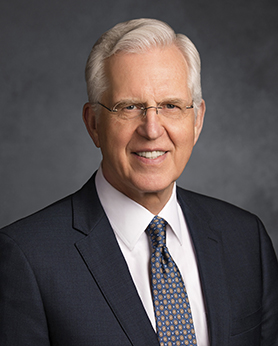
Moral Discipline, by Elder D. Todd Christofferson
Of the Quorum of the Twelve Apostles

In my attempt at applying the conference addresses for the April 2009 conference, I confronted some views on motivations, particularly regarding the straw man representation that some Christians hold up for our friends who do not share our beliefs (e.g. agnostics and atheists). (This was in response to Elder Cook's remarks; my views here.)

I took a week to analyze Elder Christofferson's talk (it was one of my favorites!). As I did this, I continued to reflect on what some claim is a marked difference between Christians and atheists, but which I boldly declare to not be. I'll present the situation as a question:

Can atheists exercise moral discipline?

First, it is helpful to define what is meant by moral discipline. Elder Christofferson put it well:

By "moral discipline," I mean self-discipline based on moral standards. Moral discipline is the consistent exercise of agency to choose the right because it is right, even when it is hard.

In conversations I've both had and seen (meaning reading online conversations), some have vehemently maintained that without Christianity, there are no morals. Conversely, I've heard non-believers claim that Christians don't really have morals—they're just behaving a certain way out of fear of damnation, they say.

Of course, both of these camps are a bit off-base: believing in Christ is not a prerequisite for morality, nor does having such a belief preclude one from "true" morality.

It seems that the question boils down to another question, one regarding the morals in the moral discipline. Are the morals followed those taught by Christ and followed because they were taught by Christ, or are they the morals taught by Christ and followed by non-believers because they, coincidentally, are the right things to do? Or is it a combination of these?

Right is right regardless of who taught it. (But why we choose to do right may be another thing entirely!)

NOTE: I'm not advocating agnosticism or atheism herejust moral discipline!

Is there one morality that is better than others? Or, if you prefer, is there one "right" that is better than other "rights"?

These questions touch on my reaction to what I've heard time and time again from society: "Truth is relative and . . . everyone decides for himself or herself what is right."

As contradictory as this is, it surfaces even among the faithful periodically. You may have seen some version of this claim in Sunday School discussions on the Word of Wisdom, particularly the interpretation(s) of caffeine, soda, and chocolate. Furthermore, Priesthood lessons have had this claim surface when Sabbath-day lessons are given, particularly around the Super Bowl!

I'm reminded of a question posed in the Restoration of Truth video by the young Joseph Smith. In response to a preacher saying, "We each try to find the answer that is right for us," Joseph replies, "Shouldn't there be one answer that is right for everyone?" (find this interaction at 5:45 in the video, embedded below, or link here.)


Many aspects of the answer that is "right for everyone" were presented in the various talks of this conference—including this one. Elder Christofferson closes with a summary of this truth:

God is our Father and that His Son, Jesus, is our Redeemer. Their law is immutable, Their truth is everlasting, and Their love is infinite.

I want to "choose the right because it is right, even when it is hard," as I apply the morals I know are true—not just because they were taught by Christ, but because they are right!
Saturday, March 20, 2010

Blessings of the Gospel Available to All

This entry is part of my general conference application series.

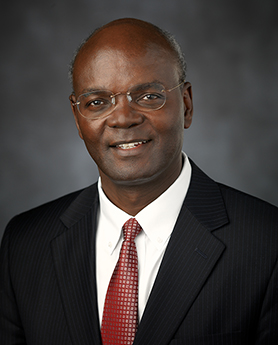
Blessings of the Gospel Available to All, by Elder Joseph W. Sitati
Of the Seventy


Last night I came upon a discussion of race, triggered by an incident involving Mitt Romney, the well-known LDS politician. Apparently, an altercation on an airplane occurred shortly after the Winter Olympics, where Mr. (or Brother?) Romney was physically attacked after asking the fellow in front of him to return his seat to the "upright position" for takeoff (one article here).

Where does race come in, you ask? I wondered, too! It turns out that the attacker (who was subsequently asked to leave the flight) has darker skin than Mr. Romney.

The race discussion was sparked by someone who apparently has a less-than-favorable view of "Mormons," and the history within the LDS church of whom the priesthood was extended to (disregarding when).

As I considered the points of this heavy-handed, almost one-sided discussion, I was incredibly grateful that the blessings of the gospel are available to all. Imagine my surprise this evening when I reviewed Elder Sitati's talk, the title of which was so in line with my grateful feelings of the previous evening.

To make the experience even better, I recalled researching Elder Sitati's history with my wife after listening to his talk in general conference. The message of his words accrued added meaning as we learned (from Wikipedia, link) that Elder Sitati is "the first black African general authority of the church," the first district president and stake president in Kenya, and that he, his wife, and children were the first Kenyan family to receive the sealing ordinance.

That's a lot of firsts.

With all of this in mind, reconsider his statement:

From humble beginnings in Fayette, New York, nearly 180 years ago, The Church of Jesus Christ of Latter-day Saints has become a global faith.

Elder Sitati is truly qualified to distinguish our church as a "global faith."

Despite difficult times of the past (and even the present), I, too, am grateful that:

God’s children on the earth today have the opportunity to understand His plan of happiness for them more fully than at any other time. . . . The standard is the same, and the blessing is the same for all. God has reaffirmed that He is no respecter of persons.

I love that even if I don't have the same impressive history as Elder Sitati, or nearly as many notable firsts, I can share in the same blessings that he and his family do. He tells that "a new celestial culture is developing in homes, nurtured by the ready hearkening to the counsel of the living prophet." I'm grateful that I can have this in my home, and that you can too—whoever, wherever, whatever you are!

Friday, March 19, 2010

An Easiness and Willingness to Believe

This entry is part of my general conference application series.

An Easiness and Willingness to Believe, by Elder Michael T. Ringwood
Of the Seventy


I'm in the process of listening to a radio interview on NPR's Fresh Air where author Bart Ehrman is outlining his departure from the faith (link to interview details). Apparently, he once believed the Bible to be inerrant, but through scholarly studies observed contradictions in various biblical accounts which, over time, convinced him that not only is the Bible false, but that God doesn't exist (actually, he's not sure if God exists—he's claiming agnosticism now).

Hearing of his book, titled Jesus, Interrupted: Revealing the Hidden Contradictions in the Bible (and Why We Don't Know About Them), made me consider authoring my own book to put his claims in a different light, and view the biblical accounts through the lens of the Restoration. While I likely won't actually do this, I have resolved to re-read the four gospels and record my impressions on the authors' points of view (I've already done this, interestingly enough, but want to do it again!).

My first impressions on why this scholar lost his faith included questioning his "inerrant" belief. Apparently many people believe that the Bible was literally penned by deity, and, therefore, is perfect. They dismiss the idea that the books of the Bible, many named after their authors, were actually authored by the authors. (Sounds strange to me.)

Another impression involved questioning what happened to his heart. Why did advanced degrees harden his heart? (I'm reminded of a play on words that might apply here, found in Alma 47:18, which discusses being poisoned by degrees.)

I was reminded of all of this as I reviewed Elder Ringwood's talk where he reminds of the need to maintain "an easiness and willingness to believe" else we suffer from hard hearts and an accompanied loss of the Spirit. While I'm sure he's not advocating an abandon of reason or inquest—I love to inquire—instead, he offers a test.

A test to measure our easiness and willingness to believe can occur each week as we attend sacrament meeting. In this meeting we renew covenants by expressing our willingness to take upon ourselves the name of Christ, to always remember Him, and to keep His commandments (see D&C 20:77). As we sit in sacrament meeting, we should find it easy to make these covenants and easy to listen and learn through the Holy Ghost.

As I increase in knowledge, understanding, and even degrees, I want to keep a soft heart and an easiness and willingness to believe.

Tuesday, March 16, 2010

Preserving the Heart's Mighty Change

This entry is part of my general conference application series.

Preserving the Heart’s Mighty Change, by Elder Dale G. Renlund
Of the Seventy


I must be pretty boring. In the past few days, I've admitted to the following: I've never broken a bone, I've never had major surgery, and I've never been outside of the United States.

Bor-ing.

In his address, Elder Renlund references an old Time article (from 1967) chronicling the events surrounding the first heart transplants (link to article). Now, these people weren't boring—they were on the cutting edge of innovation! Elder Renlund knows all about these things; his professional history is full of cardiac references (and you'll also find the word "transplant" sprinkled heavily in, too).

Given his considerable ethos on the matter of heart transplants, his subsequent point has considerable validity: "The ultimate operation is not a physical but a spiritual 'mighty change' of heart."

Perhaps I don't need surgery, broken bones, or a fully-stamped passport to rise above the distinction of boring: all I need on my resume is the ultimate operation—a change of heart.

(This is good news, because surgery sounds complicated, broken bones are unnecessarily painful, and I don't have much time for travel presently.)

Before I pat myself on the back for having had a change of heart, I need to remember Elder Renlund's main point: it's not the change of heart that matters most, it's the maintenance and preservation of the changed heart; I need to endure to the end!

After sharing an example from his life when his changed heart was being neglected, he said:

To endure to the end, we need to be eager to please God and worship Him with fervor and passion. . . . We must identify temptations that easily beset us and put them out of reach—way out of reach.

The Book of Mormon has incredible stories of missionary efforts and successes. Perhaps the more important points to me now may be the parts where those who have had a change of heart receive a spiritual biopsy: "If ye have experienced a change of heart, and if ye have felt to sing the song of redeeming love, I would ask, can ye feel so now?" (see Alma 5:12-14, 26)

Can I feel so now?

Sometimes? Yes.

Would I like to more? Of course.

I think it's time to "go under the knife" and have my spiritually changed heart biopsied to ensure that the change can be permanent. I felt the significance of Elder Renlund's reminder:

Remember, more than mortal years on this earth are at stake. Do not risk forfeiting the fruits of the ultimate operation: eternal salvation and exaltation.

In the end, I'll be fine if I'm still classified as "boring," I just want to have the courage to "press forward with steadfast faith in Christ and endure joyfully to the end," eagerly pleasing God and worshiping Him with fervor.

Monday, March 15, 2010

A Call to the Rising Generation

This entry is part of my general conference application series.

A Call to the Rising Generation, by Elder Brent H. Nielson
Of the Seventy


My eldest child is in kindergarten. At the beginning orientation meetings, we were told that the children would be learning things that we (the parents) weren't introduced to until first or second grade. I thought just an exaggeration, but am learning more each day how true that statement was. For example, when we took a bike ride this last weekend, David would read all the signs that we would see, including billboards that weren't "Dick and Jane" simple words.

I was reminded of how advanced children and youth are becoming as I reviewed Elder Nielson's address. He told that when he was a full-time missionary, he and other missionaries would pray for the work to progress in a specific area, and "wonder who those brave young men and young women would be and when they would cross that border to take the gospel to the people there." The surprise came, you may recall, when his own son wrote to report that his first area of labor as a missionary was in the very city that he had prayed for so long ago.

I wonder if my little future missionary will likewise fulfill specific prayers I offered as a missionary in Idaho and Oregon. Whether or not he serves in those specific areas, I understand the responsibility that I have as his father to prepare him now to be a good missionary then.

Here is a picture of him at a recent concert he had at his school. He wanted to wear his "Future Missionary" tag so his friends could know that he wants to be a missionary.


For this post, I invited my future missionary son to answer a few questions about missionaries and missionary work:

What will you do as a missionary?
"When I'm a missionary, I would teach stories about Jesus."

Where do you think you'll serve as a missionary?
"In Japan, because Mommy went there." (Perhaps Idaho is out...)

What do you think will be the most fun thing you'll do as a missionary?
"Go eat at people's houses."

What will be the hardest thing?
"Traveling to the islands, because it took a long time to get to Utah when we went there."

Unfortunately, it became his bedtime, so our interview was cut short. I had intended to ask him more probing questions about missionary work, but will settle for these wonderful ideas.

I look forward to seeing my sweet little children rise up and prepare for the work that is in store for them.